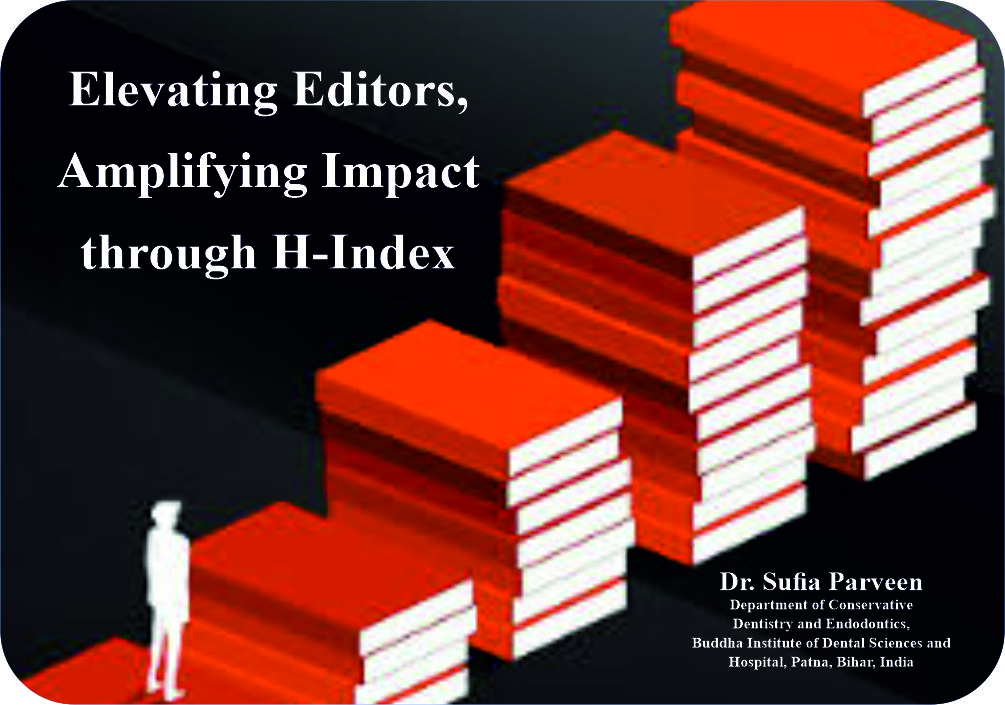
In today’s competitive academic environment, scholarly publishing is no longer limited to simply sharing research findings. Journals are now evaluated based on their influence, visibility, and contribution to advancing knowledge. Editors stand at the centre of this ecosystem, guiding the direction of journals and ensuring the quality of published work. The workshop theme, “Elevating Editors, Amplifying Impact through H-Index,” emphasises the growing need to empower editors with knowledge and tools that can strengthen the academic impact of their journals.
The H-index is widely used as a metric to measure both productivity and citation impact of research publications. It reflects how often a researcher’s or journal’s work is cited in the scientific community. For editors, understanding the concept of the H-index is essential because it helps them evaluate the influence of the journal and the research it publishes. A higher H-index generally indicates that the journal consistently publishes articles that are recognised and cited by other scholars.
Editors contribute significantly to improving a journal’s H-index by maintaining strict peer-review standards and prioritising high-quality, innovative research. By selecting manuscripts that address relevant scientific questions and contribute meaningful insights, editors ensure that the journal remains valuable to the academic community. Encouraging authors to follow ethical publishing practices, proper citation methods, and clear scientific reporting also enhances the credibility and impact of published articles. Another important strategy for editors is increasing the discoverability of research. When articles are well indexed, properly structured, and published on accessible platforms, they become easier for researchers around the world to find and cite. Editors can also promote collaboration between authors, reviewers, and editorial boards to create a supportive academic environment that encourages impactful research. Workshops dedicated to editorial development play a crucial role in this process. They provide editors with opportunities to learn about citation metrics, research visibility, indexing systems, and modern publishing tools. Such knowledge helps editors make informed decisions that ultimately enhance the reputation and scholarly influence of their journals.
In conclusion, strengthening editorial capacity is essential for improving the impact of academic publishing. By understanding and strategically utilising metrics like the H-index, editors can guide their journals toward greater recognition, credibility, and global influence. Empowered editors not only elevate their journals but also contribute significantly to the advancement of scientific knowledge.
