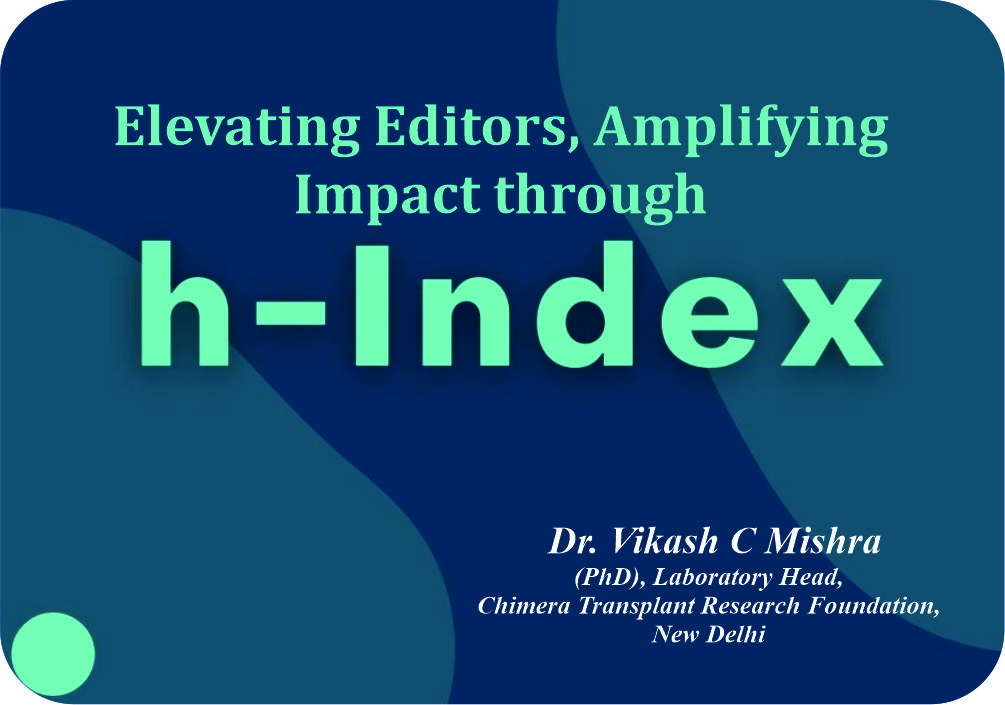
In academia, the H-index is a clear way to measure a researcher’s influence. It shows both the number of publications and how often these works are cited. For example, an H-index of 10 means a researcher has written 10 papers, each cited at least 10 times. A high H-index indicates that a researcher’s work is impacting their field, steering future studies, and improving overall knowledge.
Editors play a key role in boosting scholarly impact. By choosing high-quality research, providing helpful peer reviews, and maintaining strict standards, editors improve the visibility, credibility, and spread of published work. Publishing well-selected articles helps authors improve their H-indices and strengthens the journal’s reputation and influence. Thoughtful editorial guidance turns individual studies into meaningful contributions that enhance knowledge across various fields.
A clear understanding of the H-index helps shape effective research and publication strategies. Studies that tackle important scientific questions, fill gaps in current knowledge, or involve collaboration across disciplines are more likely to get cited. Journals that focus on transparency, fairness, and quality consistently receive significant submissions. Editors who recognize and act on these trends help publish research that is widely read, cited, and respected.
For early-career researchers, checking potential mentors’ or collaborators’ H-indices can be a smart tactic. Working with highly cited researchers gives access to strong professional networks, proven research methods, and chances for faster career growth. These partnerships create an environment where mentorship, visibility, and high-quality research support one another.
In conclusion, the rise of editorial roles is closely tied to the increased impact of research. Editors lay the groundwork for rigorous, innovative, and well-regarded scientific work. When editorial initiatives align with authors’ goals, the result is higher H-indices, greater scholarly influence, and a stronger academic community. The H-index is more than just a numerical measure; it links editorial quality to scientific impact and underscores the importance of teamwork in advancing knowledge. Supporting and valuing editors helps ensure that meaningful research continues to shape the future of science.
Elevating Editors, Amplifying Impact through H-Index