Dr. Kishore, a busy endodontist from Tirupati, spent months on his paper. It showed “nanorobots zapping bacteria in root canals”. Excited, he submitted to a top journal. AI tools scanned it quick and gave a green light. But then a human reviewer stepped in and noticed weird MeSH terms that didn’t match the methods. Digging deeper, the reviewer found AI-generated data pretending to be real trials. The reviewer flagged it, Dr. Kishore fixed it, and now it’s a real win. Stories like Dr. Kishore’s prove that reviewers save the day. One wrong publish, and dentists worldwide might use faulty technique on the patients.
In dentistry, we guard all oral issues and research on materials used in dentistry. Errors in these areas will definitely harm smiles of innocent people. Even though AI speeds things up and spots plagiarism or bad statistics faster it misses tricks, biases, or fakes in the research.
Here are easy ways or fixes we can try:
AI helpers: AI checks basics; we judge the smart stuff.
Lock it safe: Block chain keeps reviews honest without fakes.
Early alerts: AI flags risky authors ahead of time.
Team chats: AI links us with global experts for topics in various fields.
Giving papers a “trust badge” after our check is one of the best ideas. AI does numbers; we add real-world sense. We could even add fun “integrity badges” to papers, like a thumbs-up from our hybrid human AI check. It’s about teaming up AI’s speed plus our gut feel and heart.
Like Dr. Kishore’s scare, if we blend AI power with human smarts, research stays true and useful.
Reviewers are the human glue holding trust and truth together. Let’s embrace these tools, share our stories, and keep research honest and exciting.
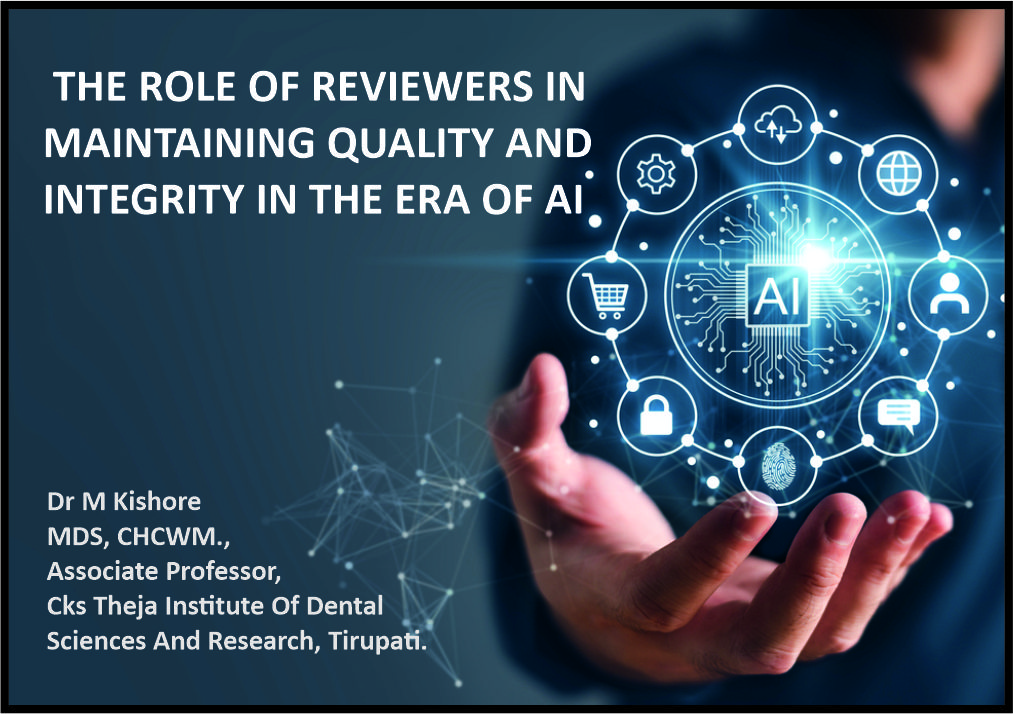
THE ROLE OF REVIEWERS IN MAINTAINING QUALITY AND INTEGRITY IN THE ERA OF AI